
Direct Answer
Choose between a 4G and a 5G mobile proxy by four criteria: use case, budget, availability and speed need. Trust is not one of them — both generations hand you a real German mobile IP that platforms read the same way. Pick 4G for lean budgets and thin 5G coverage; pick 5G for large transfers, many parallel sessions and latency-sensitive work.
The Four Criteria That Decide It
The generations differ in four areas a buyer can actually feel. Trust is not one of them: a 4G IP and a 5G IP from the same carrier network read identically to a platform, because both are real mobile-network addresses. If you want the technical background behind that — throughput ranges, latency figures, fallback behavior and why the trust signal is generation-independent — the 4G proxy explainer covers it in depth. Here, we stay on the buying decision.
1. Use case — request-heavy or transfer-heavy?
Most proxy work is request-heavy: scraping product pages, checking SERPs, verifying ads, monitoring prices. These send many small requests, so raw bandwidth rarely decides success — either generation keeps up. Transfer-heavy work — bulk downloads, long crawls, media pipelines, many parallel sessions — is where 5G's extra throughput visibly shortens runtimes.
2. Budget — what the extra speed costs
5G capacity costs more to provide than legacy 4G, and mobile-proxy pricing across the market reflects that. If your workload sits comfortably in the request-heavy category, paying for 5G headroom buys runtime you will not use. Note that the fair-use 20 GB/day data allowance is generation-independent, so your data volume alone never decides the 4G-vs-5G question.
3. Availability — where each generation works
4G has the widest, most mature coverage and stays steady in more places. 5G now reaches roughly 95% of Germany's land area, according to the Bundesnetzagentur's mobile monitoring (as of October 2025), but real-world performance still depends on the individual cell, signal strength and time of day. If your work must run from locations where 5G is patchy, 4G is the dependable pick.
4. Speed need — latency and throughput
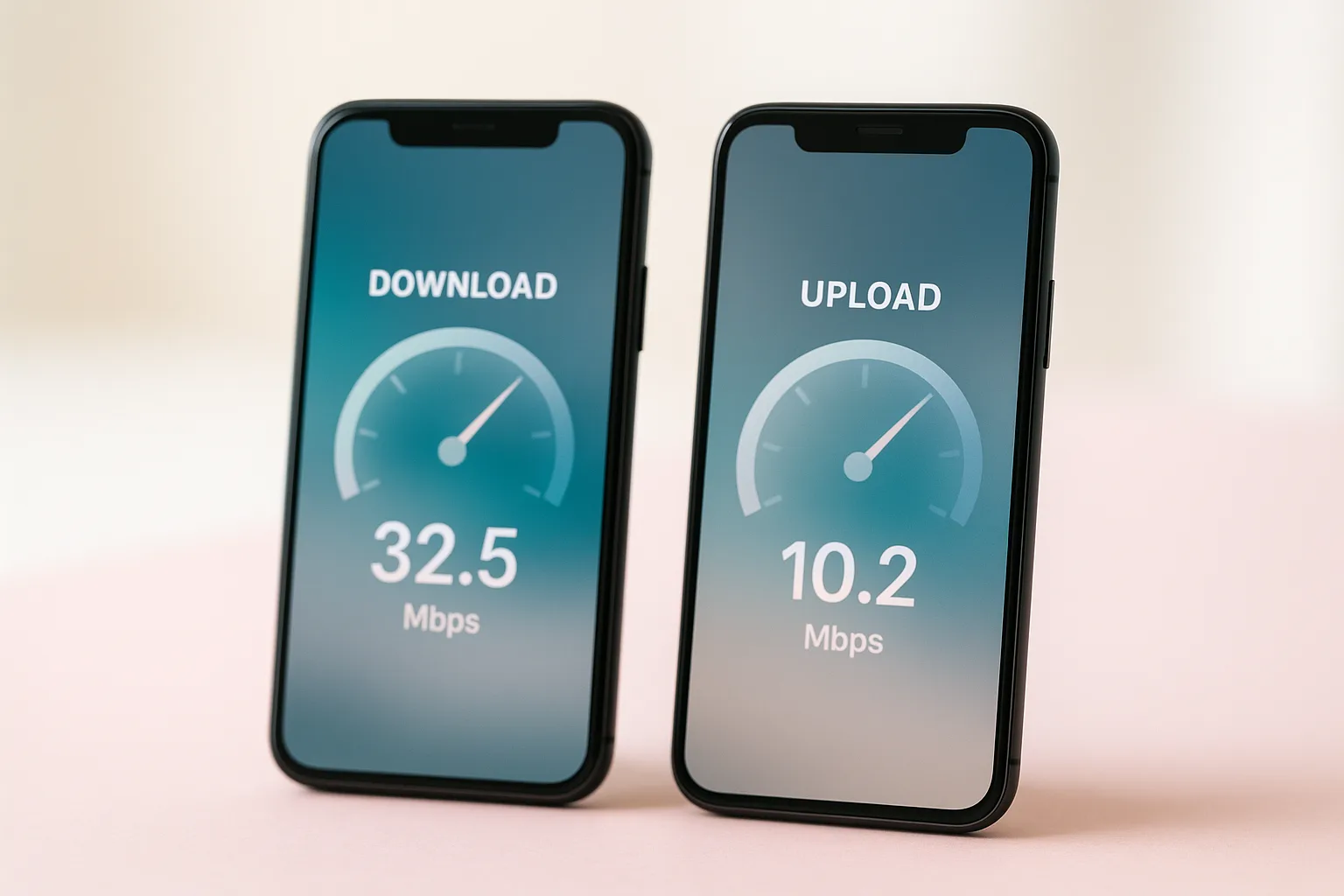
Latency-sensitive work — interactive tooling, tight request loops, live testing — benefits from 5G's lower round-trip time. Pure throughput only becomes a deciding factor once transfer volumes or session counts grow large; below that, the difference is headroom, not capability.
Quick Decision Table
| Your situation | Better fit |
|---|---|
| Many small requests: scraping, SERP checks, ad verification | Either — 4G is sufficient |
| Large transfers, long crawls, many parallel sessions | 5G |
| Latency-sensitive or interactive workloads | 5G |
| Lean budget, steady throughput is enough | 4G |
| Run locations with patchy 5G coverage | 4G |
Which GermanProxy.io Plan Fits
GermanProxy.io runs a 5G-only catalog, so the generation question is answered before checkout — the choices that remain are connection type and network line:
- Dedicated or shared: A dedicated connection gives you one endpoint reserved for your work alone — a consistent IP identity for the length of a task. A shared connection spreads the cost across several users and fits leaner budgets.
- Blue or Red Premium Mobile Network: Two genuine German carrier lines, labelled neutrally. Run availability-critical jobs on one line and keep the other as a second clean route when you split a job across networks.
Both lines come with sticky sessions and rotation on demand, HTTP/SOCKS5 and an OpenVPN config, at a fair-use 20 GB/day allowance. Browse the plans to compare the four products directly.
FAQ
Which should I choose, a 4G or a 5G mobile proxy?
Decide by workload, not by trust — the IPs read the same to platforms. If you move large volumes, run many parallel sessions or need low latency, 5G is the fit. If your work is many small requests on a tight budget, or runs where 5G coverage is patchy, 4G is sufficient.
Is a 5G mobile proxy worth the higher price?
Only when the workload uses the headroom: large transfers, long crawls, many parallel sessions or latency-sensitive tooling. Request-heavy jobs like scraping, SERP checks and ad verification rarely hit 4G's limits, so the extra cost buys little there.
Does 5G coverage affect a mobile proxy in practice?
Yes. 5G reaches roughly 95% of Germany's land area, but real-world speed still depends on the individual cell, signal strength and time of day. 4G's broader, more mature coverage makes it the steadier choice where 5G is patchy.
Which GermanProxy.io plan should I pick?
The catalog is 5G-only — four German mobile proxy products across the Blue and Red Premium Mobile Network, each available dedicated or shared. Pick dedicated when one consistent IP identity matters, shared for leaner budgets, and the network line for availability or as a second clean route.
CTA
Need the 5G headroom rather than just reading about it? GermanProxy.io's German mobile proxies run on 5G over the Blue and Red Premium Mobile Network, dedicated or shared — browse the plans.
Get a German mobile proxy: Real 4G/5G IPs from Germany, fair-use 20 GB/day — see German 4G/5G mobile proxy options or try a shared 5G German proxy.